GOOD MORNING – Shawcross

Solitaire Music

Soothing guitars, soft voices, and lonely lyrics. Welcome to the wonderful world of indie rock. It’s a place where even the most energetic music fans can find time to relax.

Here we have an indie rock duo from Melbourne, Australia by the name of Good Morning. Could it get any more laid back? Apparently yes, because it turns out these guys are not quite as chill as they seem.

Released in 2014, the Shawcross EP was eaten up by indie fans everywhere and critically praised for the addictive blissful feeling Stefan Blair and Liam Parsons have created with only seven tracks. This dreamy bedroom pop will brighten any room and plays just as well on a late night as it does on a good morning.

Everything about the sound feels relaxing and nice to hear, but there is an interesting energy surrounding this EP that contradicts its soothing nature.

There is something to be said about the lyrics and somber tone of the vocals on this record. It seems the words don’t always match up with the blissful dreamy music behind them. Was this a thematic mistake, or could it be an intentional and accurate representation of consciousness?
Allow me to explain it this way: This album is a musical representation of the “Sunday Scaries.”

It’s Sunday, you have the day off and you’re happy to have this time to yourself, but inside you know there are problems brewing in the coming week. This album brings this unique human feeling into physical form. The music supplies a nice relaxing day off, until the words fill it with anxiety and paranoia.

Each track on this record seems to be looking towards a future the speaker does not want to face. “Once You Know,” “Time to Try Again,” “Before My Ears Explode.” Each of these titles point towards something happening soon, as if the speaker is nervous and eagerly awaiting some event.

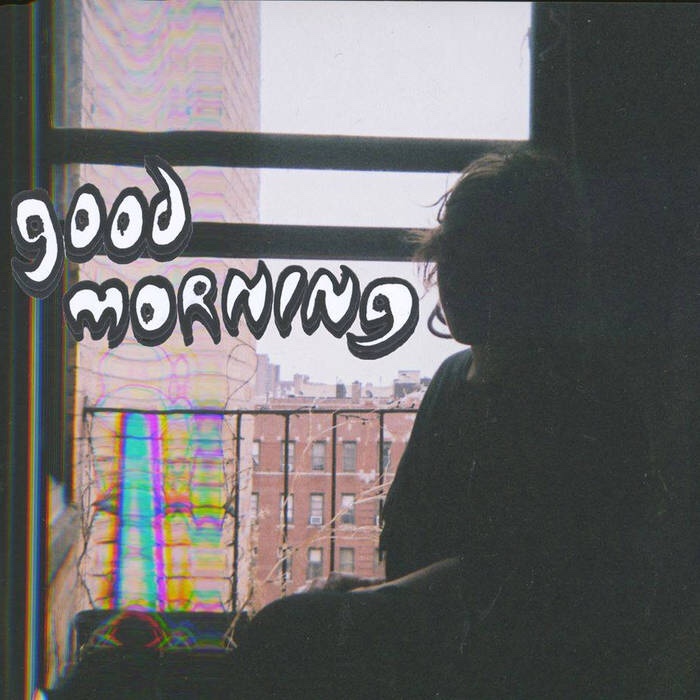
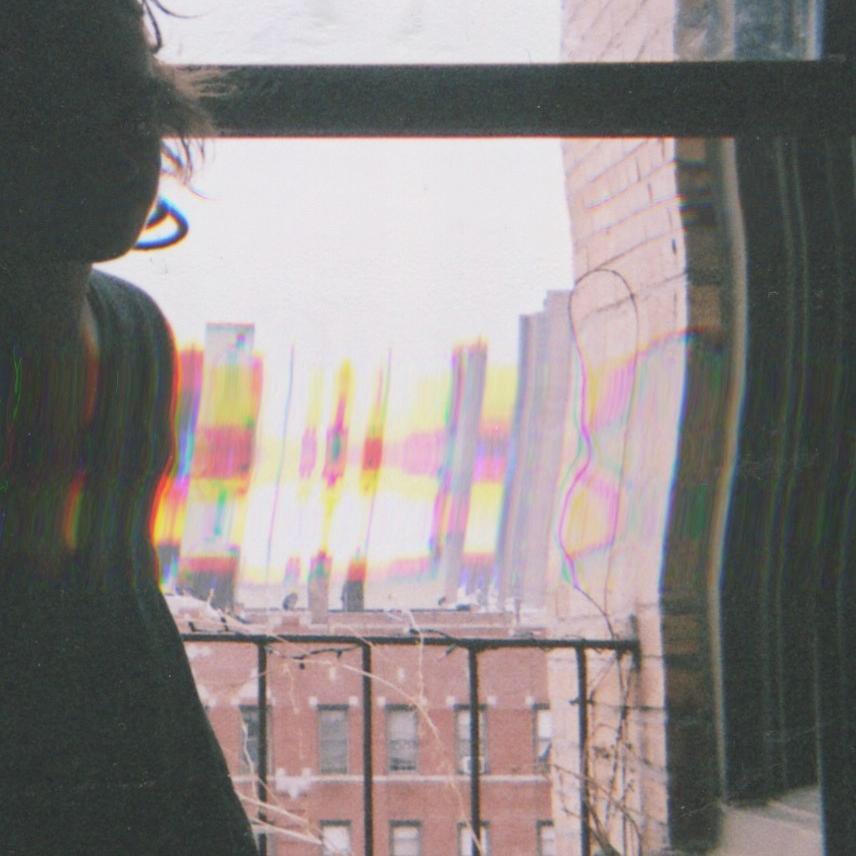
This album feels exactly how it looks. These songs can place you inside of the cover art. You enter a dark room within a bright morning, in a place you cannot always stay, with someone you may not know forever.
Good Morning’s Shawcross is an incredible meditation on the balance between comfort and anxiety, preparation and paranoia. One cannot exist without the other.

This short piece of music was a diamond in the massive pile of indie records. Still to this day, people are digging it up and relating to it. In fact, even A$AP Rocky sampled the EP on his 2018 TESTING album. Rocky’s song “Kids Turned Out Fine” uses the main guitar chords and melody from “Don’t Come Home Today.”

Yeah, that’s right. A$AP Rocky and I listen to the same indie rock.

RAGE AGAINST THE MACHINE – Self Titled

Sony Music Entertainment

There are bands who make music because they want to, and those who make music because they have to. In order to listen to Rage Against the Machine, one must understand that this group was never in it for the fun.

RATM had to unleash itself upon the world, or else the burning fury of political distress sleeping within these four LA kids would’ve certainly eaten them all alive. Instead, the boys stirred their diverse musical influences into a strange sludge of metal, funk and hip-hop.

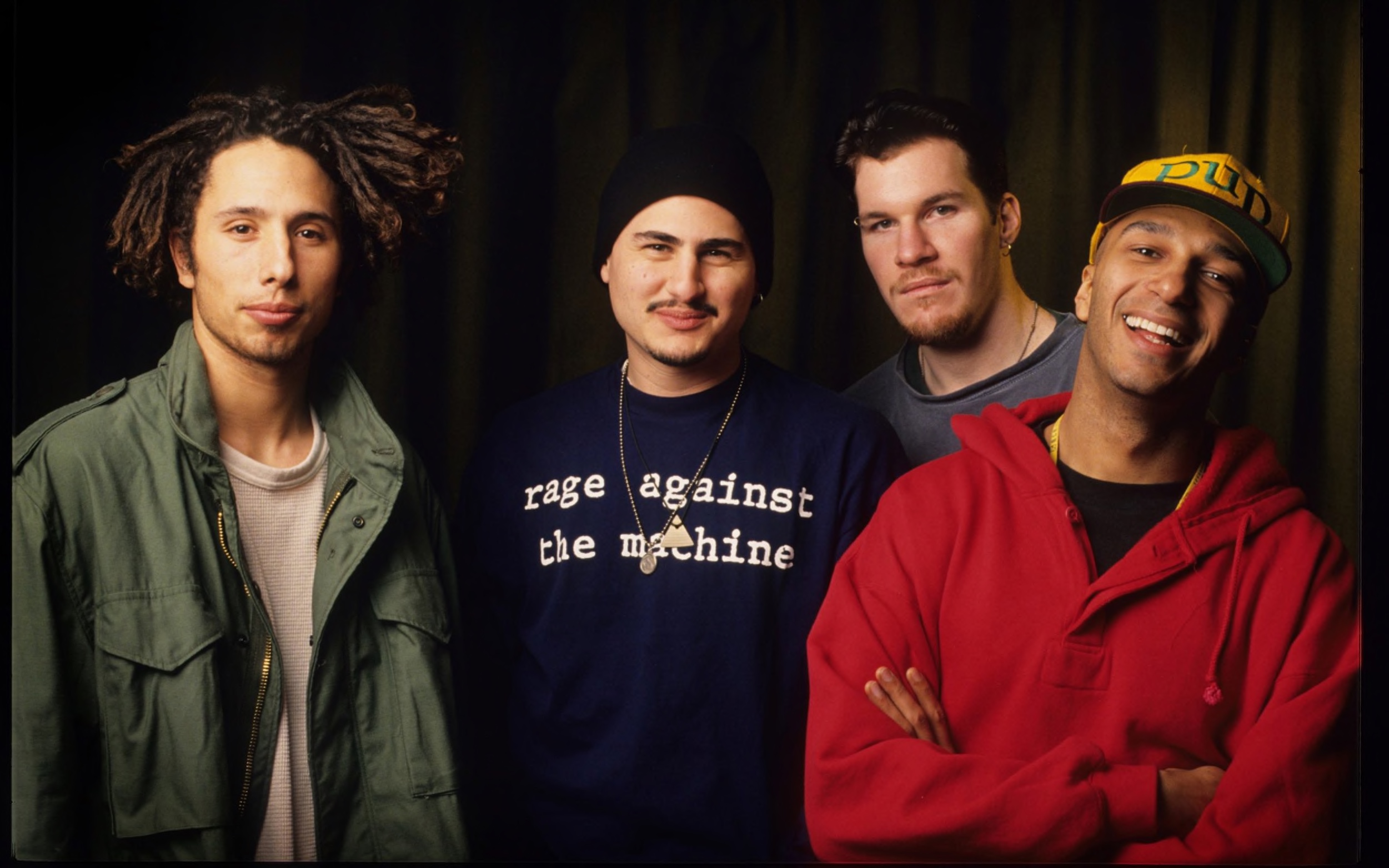
To lead us charging through this genre-spliced battlefield, is the voice of a frontman who goes beyond passion, Zack de la Rocha. Zack is accompanied by the incredible combination of otherworldly guitarist Tom Morello, powerful bass guitarist Tim Commerford, and the genre-flexible percussionist Brad Wilk.

Left to Right: Zack de la Rocha (Vocals), Brad Wilk (Percussion),
Tim Commerford (Bass), Tom Morello (Guitar)

Rage’s 1992 debut album was born, and revealed itself as the perfectly thematic beast it is. This album, from start to finish, is an explosive and relentless onslaught of passionate energy. Every song is led by Zack’s animalistic snarls with undeniably catchy riffs from Morello.

The opening track “Bombtrack” will teach you the ways of Rage in the first few seconds. It feels as if they tried to manufacture a chemical formula for making songs, and it came out as an addicting and abuseable substance. The slowly building tension that begins the album is present throughout its later tracks.

Rage seems to reward their listeners with incredibly powerful bridges and Morello’s abstract solos that are often hidden deep in their longer and more repetitive tracks.

Take the famous chant of aggression “Killing in the Name” for example. The song is five minutes and fourteen seconds and highly repetitive. Yet, the slight increase of volume in Zack’s voice is suitable buildup to keep a listener interested. Rage’s use of repetition seems to fuel the excitement behind their music even more, as it builds the anticipation of the inevitable explosion.

Tracks such as “Know Your Enemy,” “Bullet in the Head,” “Wake Up,” and the outro “Freedom,” all follow this formula. Undeniably intriguing guitar, funky rhythms, and Zack’s love-able high pitched growls of political poetry.

Rage still finds time to mix it up, however. “Settle For Nothing” is a slowed down, more emotional take on their sound. “Township Rebellion” is a more bass-heavy track that stands out a bit during its introduction.

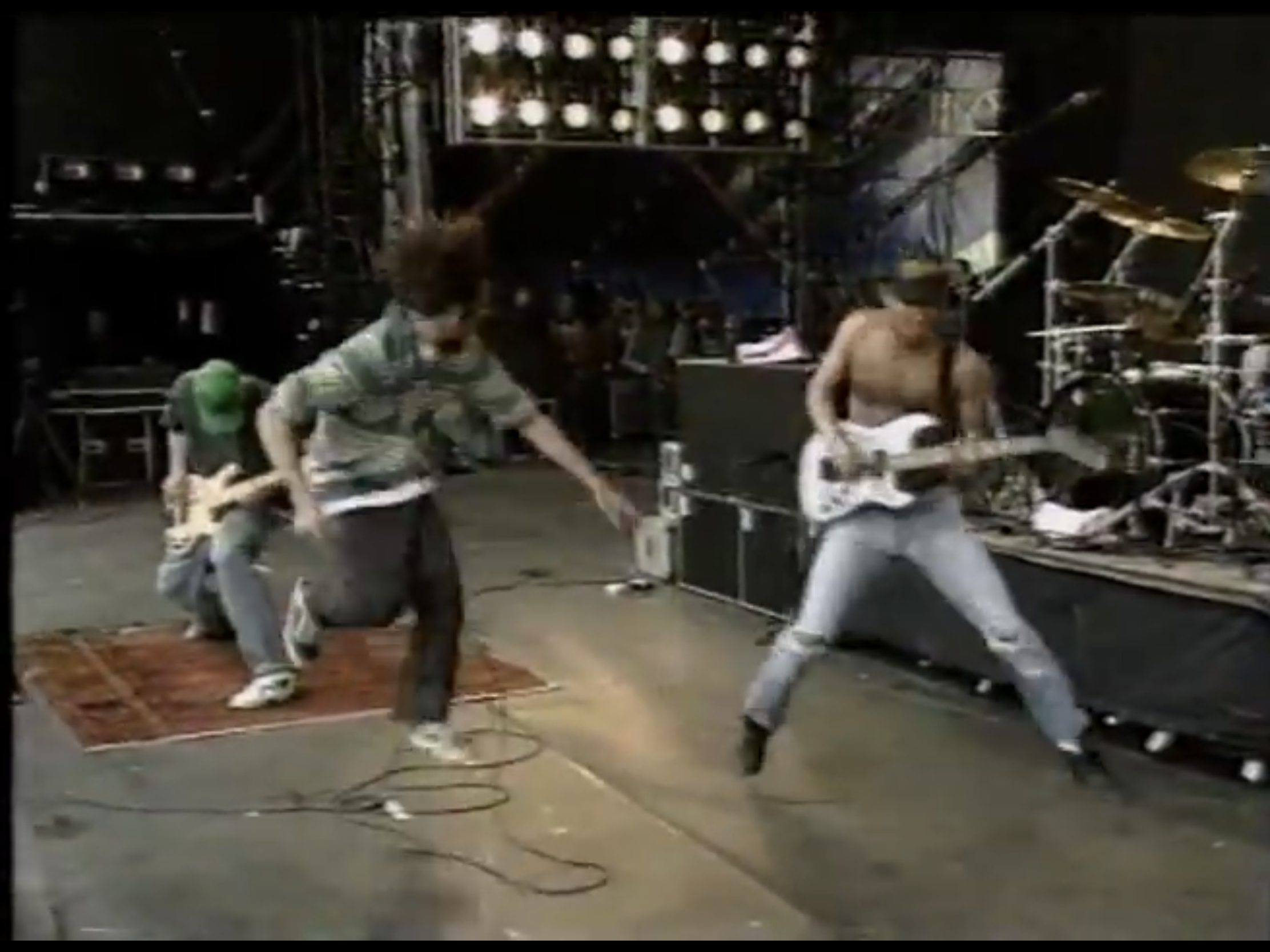
My personal favorite track on this album is “Fistful Of Steel.” The abstract guitar accompanied by the slower bass creates an incredibly tense mood. The bizarre and stinging cry of Morello’s guitar screeches as Zack suddenly jumps in with “Silence! Something about silence makes me sick!” Lines such as, “If the vibe was suicide then you would push the button,” condemn following the crowd. Zack identifies himself as “not a silent one, but a defiant one, never a normal one, cause I’m that bastard son!” And asks you to do the same.

If you want to understand the true tension and power behind this song, and see how crazy a Rage concert was, just watch this performance from Pinkpop Festival 1993 in the Netherlands.

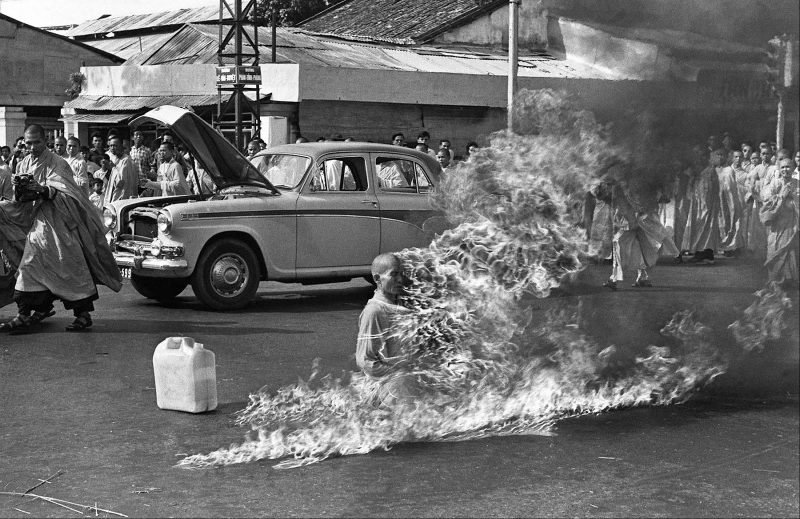
The albums cover has an interesting history that further contributes to the themes and messages throughout it’s songs.

This 1963 photo, courtesy of Martin Browne, is far from staged. The shot depicts a Vietnamese Buddhist monk, resting calmly as he burns alive. Photographer Browne recalls watching in horror as this monk ignites himself in protest of the recent Vietnamese president’s oppression of Buddhism. The importance of this photo rests in the monk’s unemotional face. He blissfully ends a life he refuses to live without his faith, without his passions and beliefs. If theses parts of him are going to be stepped on by someone more powerful, he would rather be dead.

Feeling the aura around this photo is essential to understanding why RATM chose this image for their first ever release. It perfectly encapsulates the feeling of oppression. At some point in each of our lives, we burn ourselves. We change and bend to the wills and needs of others and the world around us. When another person decides who you are allowed to be, they are soaking you in gasoline. You must decide whether you will ignite yourself and give in, or rage against the machine.